When you think of a barrister, you might imagine an orator confidently commanding a courtroom. But in Victoria's civil courts, it is increasingly not the defining image of legal excellence. More often, the work is done across a table, in a room without a bench, before a mediator rather than a judge.
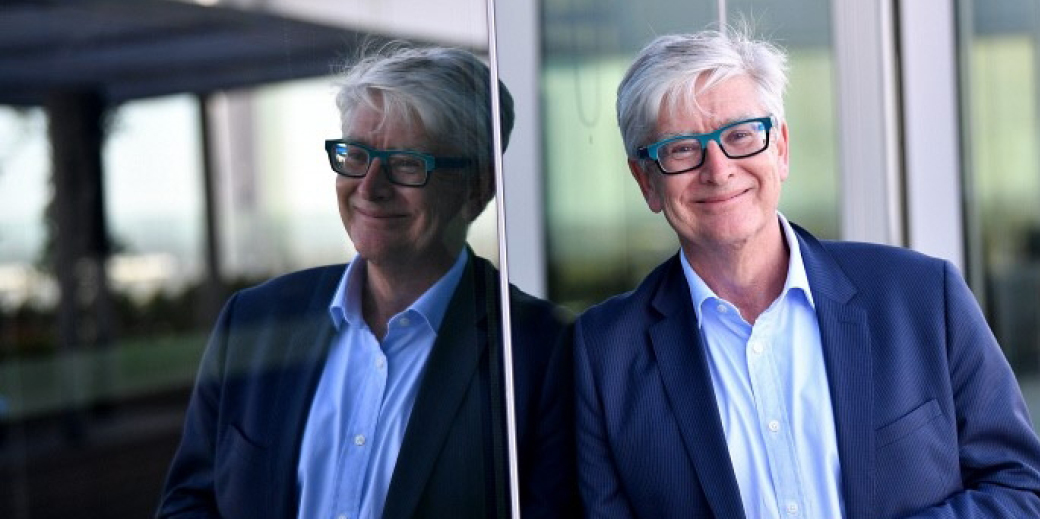
Tasman Ash Fleming, barrister, nationally accredited mediator (AMDRAS), and adjunct lecturer at the College of Law, knows both worlds well. With decades of experience in commercial and wills and estates litigation, formal training in negotiation at the University of Oxford Saïd Business School, and a practice that spans both advocacy and mediation, he is well placed to reflect on what has changed, and what it means for lawyers working in Victoria today.
We spoke with Tasman to understand how Victoria built one of Australia's most developed mediation cultures, why it works, and what it genuinely demands of the practitioners operating within it.
How Victoria got here: from backlog to best practice
The story of mediation in Victoria does not begin with a policy paper. It begins with a phone call.
About 40 years ago, the County Court was struggling under a heavy list, particularly in the building division. Given power to appoint mediators to clear it, the Court turned to the bar. The late Henry Jolson AM KC received a call from Judge Lazarus asking whether he knew what a mediator did. He did not. He was appointed anyway, alongside Maurice Phipps KC and George Golvan KC, to mediate the building list.
From those unlikely beginnings, something lasting took hold. "The Courts then began to integrate mediation into different courts and tribunals as standard practice," Tasman says.
Over the following decades, that integration deepened. Today, the County Court's Commercial Division and its Family Property (TFM) List have made mediation the expected default, rather than the exception. The TFM List in particular, spearheaded by the judicial leadership of Her Honour Judge Tran and now His Honour Judge Fraatz, offers a striking illustration of just how far things have come.
“The effect of their work can be seen by the numbers in the Annual Reports,” Tasman explains. “The amount of matters proportionately is tiny. In one year (2021/2022) the family property list there were three trials and two were unopposed.”
How does the framework operate in practice?
Judicial encouragement alone does not explain Victoria's results. What makes the model effective, Tasman argues, is the way specific structural features combine to make settlement genuinely attractive.
"The Family Property List, for example, has a practice note. There are a number of factors which make mediation successful, such as informal processes and a cap on costs which keep costs down, viva voce with a set trial date soon after the mediation," he explains. "These factors mean the parties are minimising their legal costs, and they know they will have a trial relatively soon. Where documents are shared prior to the mediation and parties know what evidence is available they can make an informed decision about the merits of settling their case at mediation."
Panel schemes are equally important to the day-to-day operation of the framework. The Victorian Bar's commercial and family property protocols provide parties with direct access to barrister mediators. The List of Mediators (LEM) through the Magistrates' Court of Victoria offers a further referral pathway. Tasman describes these schemes as "integral, both for promoting the general practice of mediation but also the specific referral," offering a trusted, neutral appointment at a reduced cost. When parties and their solicitors cannot agree on a mediator, panel schemes help resolve the impasse.
Why courtroom skills are not enough
So, what does all of this mean for lawyers? Quite a lot, as it turns out.
"Mediation is a reality check for barristers," Tasman says plainly. "There is no judge/jury and the hyperbole that might be tempting in a courtroom often falls flat in a mediation."
It is a disarming observation. Indeed, the skills that make a compelling advocate are not the same skills that make an effective negotiator. In court, the goal is to win. At mediation, the goal is something more nuanced: to achieve the best available outcome for the client, which may look very different from a verdict.
"The barrister's role is the same as in any negotiation, that is to manage their client's expectation and to properly advise on the merits and also the risks," Tasman explains. "In many instances, there will be need to persuade the other side or explain the position, but without final submissions. Their role is to focus on terms of settlement, which are almost entirely irrelevant to a court where terms, confidentiality and other matters will not be addressed."
That reorientation extends to ethics. Tasman follows the work of Associate Professor Bobette Wolki and Professor Lola Akin Ojelabi, whose scholarship on mediation ethics he describes as world-leading.
Importantly, these insights are just as relevant for solicitors.
"This begins in the law school with subjects such as Litigation and Dispute Resolution, where there is exposure to these processes alongside the bread and butter procedure of the Civil Procedure Act."
To this end, it’s worth developing the skills.
“When I trained in the Lawyers’ Mediation Certificate at the Victorian Bar and was accredited under the NMAS system in 2018 I felt really energised and tried to implement my learnings in my trial practice,” Tasman says. “I then trained at the Program on Negotiation at the University of Oxford Saïd Business School and I found there were and are techniques which I use.”
Where things are heading
Tasman's outlook on the future of mediation is not simply that there will be more of it. He anticipates that its growth will reshape litigation itself. "It is likely to have a fold back to the trial practice," he says. "What I mean by that is that it will likely lead to processes such as reduced formality and viva voce only trials and shorter delays which in turn promote mediations."
On the question of whether mediation delivers better outcomes, Tasman is characteristically precise. Better depends on what you are measuring: delay, cost, certainty, settlement terms, or the avoidance of trial risk. On most of those measures, most of the time, mediation stacks up. "Even in those cases where the party is properly advised and appreciates the risks, including financial risks, it may still be a better outcome."
The lawyers who will best serve their clients in this environment are those who have stopped thinking of advocacy and dispute resolution as separate disciplines and have begun developing genuine competence in both. The courtroom remains important. But increasingly, the mediation table is where it counts.
--
Tasman Ash Fleming is a barrister, nationally accredited mediator (AMDRAS), and adjunct lecturer at the College of Law. He practises in commercial litigation, wills and estates, and dispute resolution.





































![How to handle Direct Speech after Gan v Xie [2023] NSWCA 163](https://images4.cmp.optimizely.com/assets/Lawyer+Up+direct+speech+in+drafting+NSW+legislation+OCT232.jpg/Zz1hNDU4YzQyMjQzNzkxMWVmYjFlNGY2ODk3ZWMxNzE0Mw==)